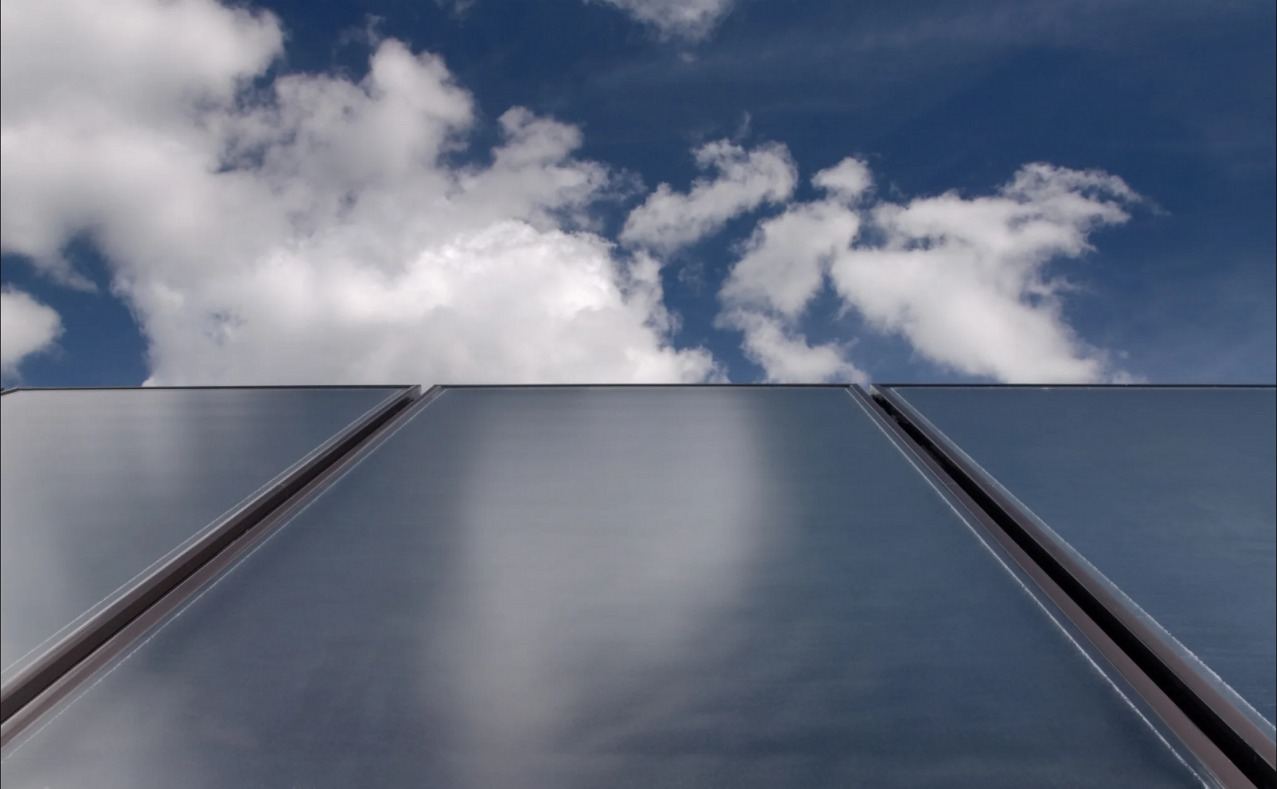
Residential
Homes with steady hot water demand. High efficiency, low maintenance, and a supply that keeps working through the year rather than only in August.
Domestic installations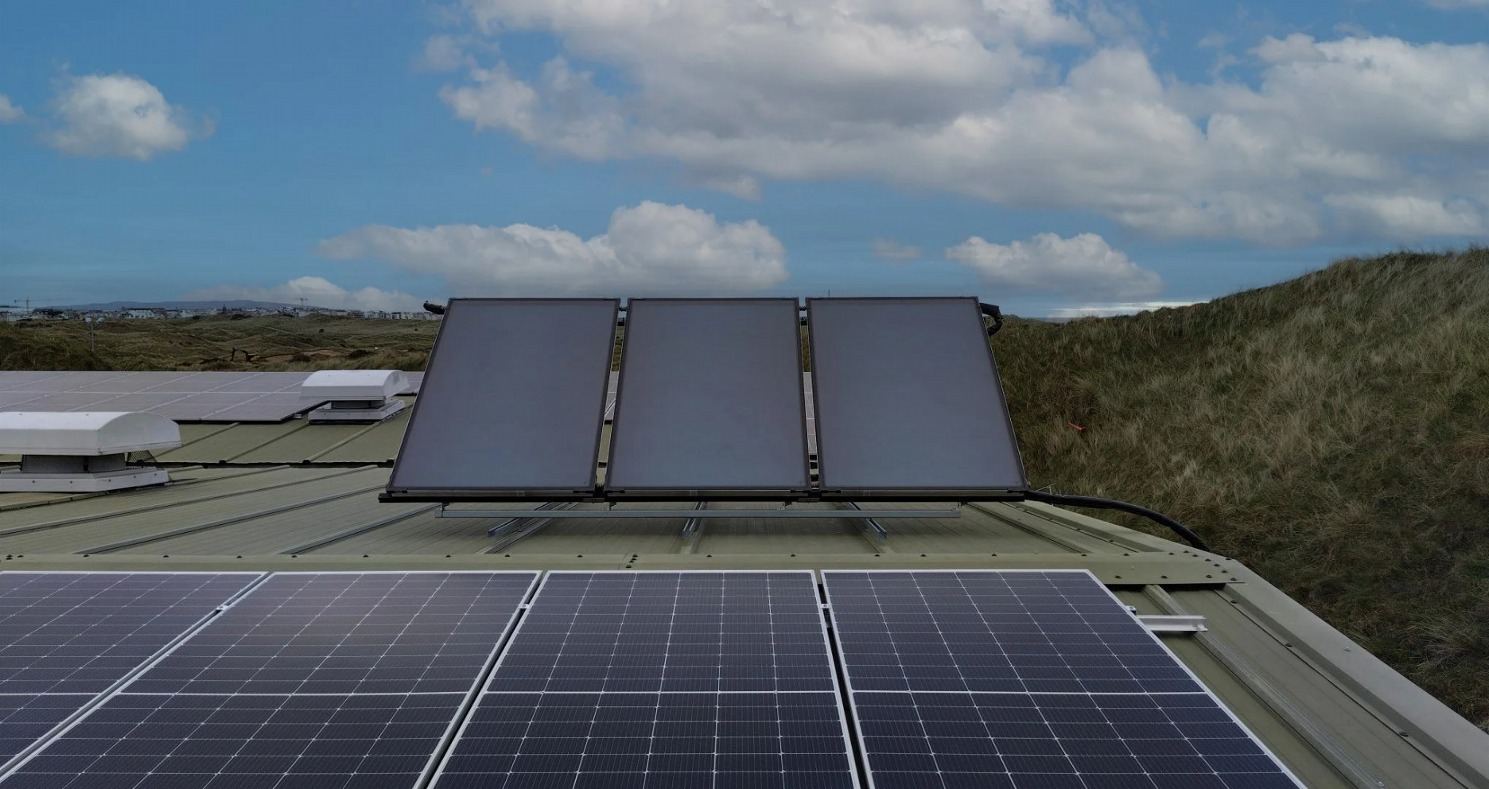
Solar thermal hot water · Northern Ireland & Ireland
Collectors that heat your water directly, instead of making electricity first. Three to four times more efficient than PV at that one job.
60%
off annual hot water energy costs
3–4×
more efficient than PV at heating water
Lowest
carbon footprint of any renewable
Thermal vs PV
It’s a fair question, and the answer is about the route the energy takes. PV is built to make electricity. If you then want hot water, that electricity has to be turned back into heat. Solar thermal skips the detour.
One conversion
3–4×
more efficient than PV at this one job — which is why three collectors cover the hot water on a roof that needs a whole field of PV for the electricity.
A collector absorbs heat rather than generating current, so a far larger share of what lands on it is captured — and it goes straight into the cylinder. No inverter, no immersion element, no conversion back.
Three conversions
A photovoltaic cell only works with part of the spectrum; the rest of the energy that hit the panel is lost as waste heat. Then the electricity it did make has to be turned back into the heat you wanted in the first place.
Thermal and PV are not rivals — many of our commercial sites run both. PV covers the electricity, our collectors cover the hot water, and neither is asked to do the other’s job.
See a roof running bothWho it is for
The same collectors, sized to the demand. A family of four and a dairy parlour are the same problem at different scales — water that has to be heated every day, whatever the weather does.
Homes with steady hot water demand. High efficiency, low maintenance, and a supply that keeps working through the year rather than only in August.
Domestic installations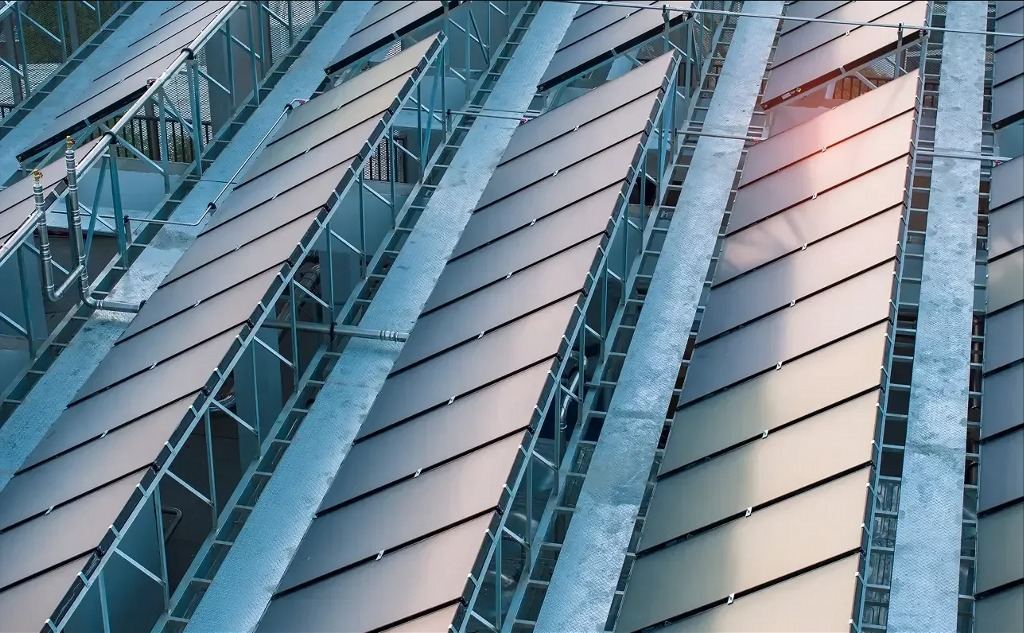
Hotels, leisure centres and process heat. High-capacity systems that cut operating cost and give you a number to put against a sustainability target.
Commercial projects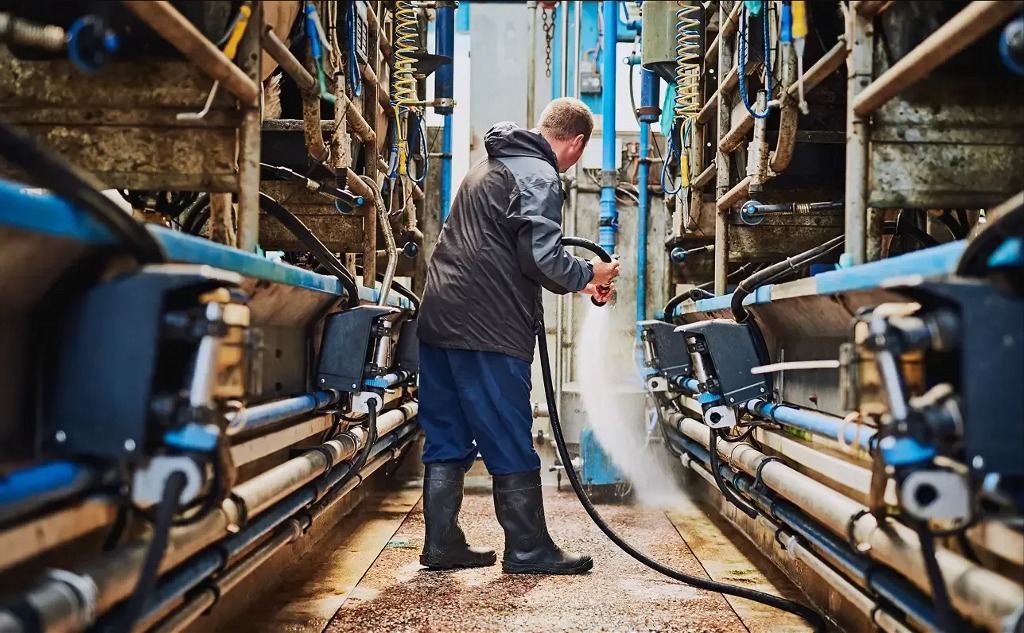
Parlour wash-down and bulk hot water, twice a day, every day. The heaviest and most predictable demand there is — which is exactly what solar thermal is good at.
Agricultural projectsThe collectors
The difference is not performance, it is fitting. One sits above the roof you already have. The other takes the place of the covering and finishes flush.
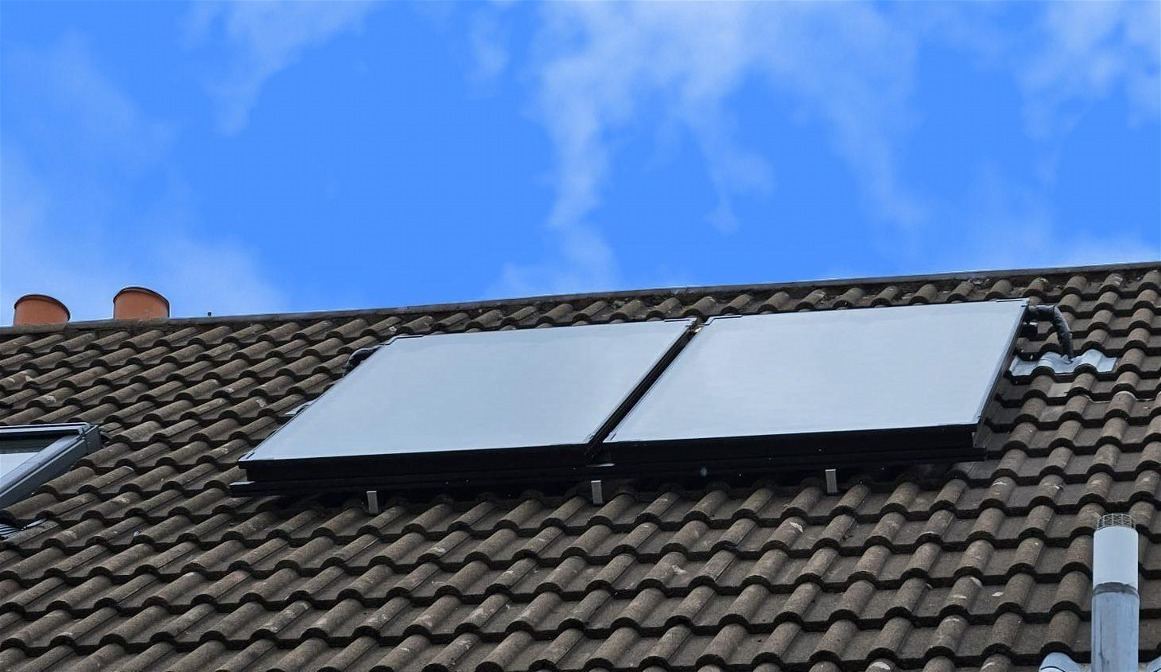
Mounted on a frame above the roof covering you already have. Nothing comes off the roof.

Takes the place of the covering and weathers in flush, so it reads as part of the building rather than an addition.
Not sure which? If the roof is staying as it is, it’s on-roof. If the covering is coming off anyway, integrated fits at the same time and finishes flush. Either way the collectors route into a twin-coil cylinder and report into the SenerSol app.
Talk to an engineerInstalled and running
Golf club, island hotel, terraced house. Different buildings, the same question answered — how much of the hot water can come off the roof.
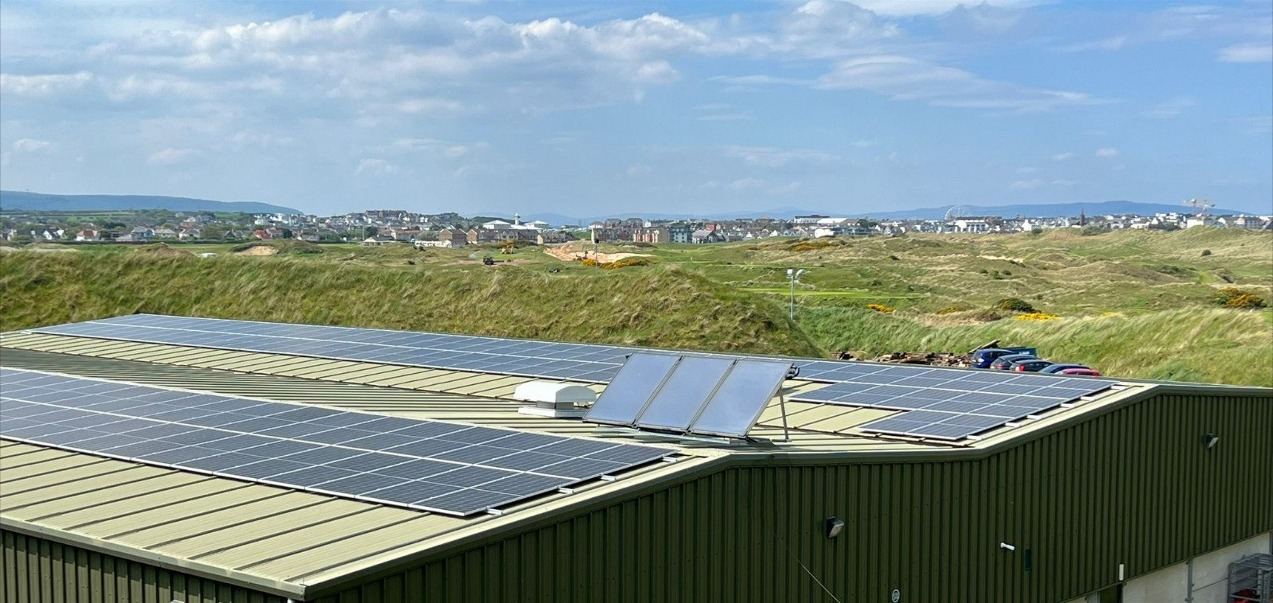
Collectors added to a roof already carrying a large PV array — the electricity and the hot water handled separately, on the same structure.

An existing installation upgraded on an island site, where every litre of fuel arrives by boat and downtime is expensive.
Two collectors onto an existing pantile roof. Nothing came off, and the existing cylinder did the rest.
Domestic · Co. Donegal
Installed in the mid-2000s.
Recommissioned, not replaced.
We were called to a system two decades old. It did not need ripping out — it needed recommissioning. That is what “proven” is supposed to mean.
Read the Donegal case studyThe SenerSol app
A solar thermal system that cannot be measured is a system you have to take on trust. Every SenerSol install reports into the app, so the saving is something you read rather than something we assert.
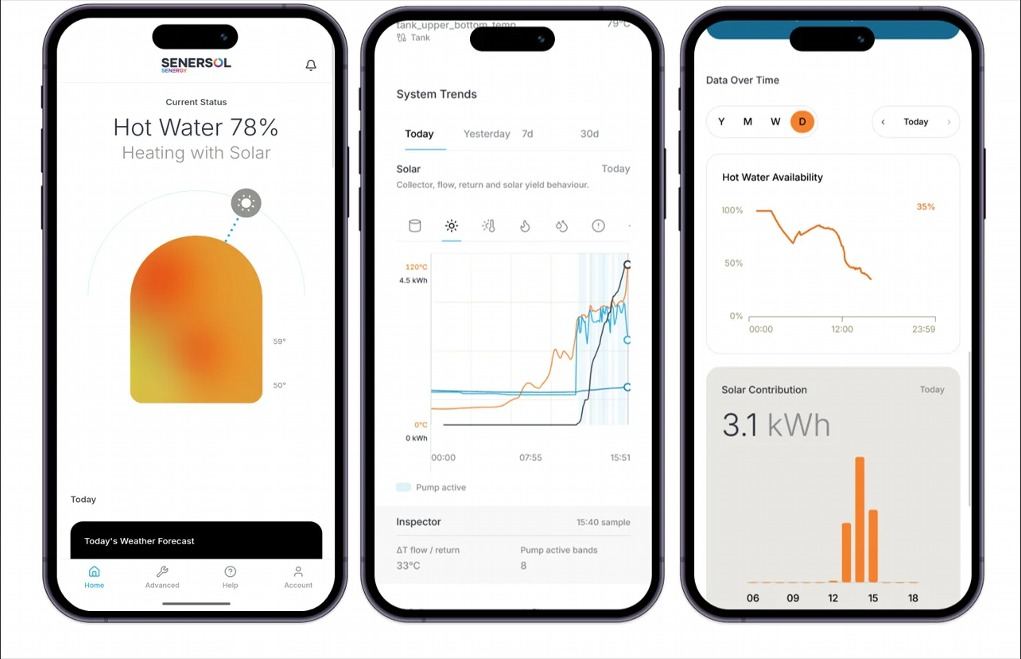
Right now How much hot water you have, and whether the sun or the boiler is making it. The only question most people ever ask.
What the collectors did Collector temperature, flow and return, pump activity and yield — across today, the last seven days or the last thirty.
What the sun contributed Solar contribution in kilowatt-hours against hot water availability — which turns the saving on this page into a figure for your building.
Included with every SenerSol system. Which means every number further up this page is one you can go and check on your own roof, rather than take our word for.
Inside the appEnergy audits for SMEs
We audit energy use for small and medium businesses — where it goes, what it costs, and which changes are worth making first. Sometimes that is solar thermal. Often it is something cheaper that nobody had measured.
01
Understand where your energy actually goes
02
Identify the savings worth chasing
03
Cut consumption and emissions
04
Assess what renewables are worth to you
€2,000
SEAI voucher towards a professional energy audit. In most cases it covers the whole cost.
To be eligible
There is no funded audit scheme in Northern Ireland at the moment. We say so rather than let you find out after the enquiry.
What we offer instead is a paid audit priced for an SME — the same commercially focused survey, the same roadmap, no scheme attached.
Audit fee
Fixed price, quoted up front
Separate grants apply to the installation itself, on both sides of the border, and they move. We keep the current rates on one page rather than in the small print here.
Grant supportGet in touch
So tell us which one you are asking. You will get an answer to that, from someone who has been on the roofs, rather than a brochure.
SenerSol is a trading name of Senergy Innovations Ltd.
Tell us about the building and roughly what the hot water is costing. We will come back with what a system would look like on it, and what it would save.